




.png?width=256&height=256&name=customer-service(1).png)

.png?width=64&height=64&name=calendrier(1).png)
.png?width=64&height=64&name=communique-de-presse(1).png)
.png?width=64&height=64&name=livre(1).png)
.png?width=64&height=64&name=blog(2).png)





For several years now, digital pathology has been presented as the new way to practice pathology. The difference today is that this future has become reality, and laboratories making the transition are discovering that the process is far less complicated than they once imagined.
For a long time, going digital felt like a move reserved for the largest academic centers. The technology was promising but expensive, workflows were still immature, and the question of “when” was always easier to postpone than to answer.
That equation has changed. The infrastructure is mature, the clinical evidence is solid, and most importantly, the cost of waiting is becoming harder to justify than the cost of taking action. Laboratories that digitized only three years ago now benefit from capabilities that were previously out of reach: networked collaboration, remote validation, instant second opinions, seamless case sharing, and quality traceability that glass slides simply cannot provide. Not to mention the opportunities surrounding data and AI.
This is not about chasing innovation for its own sake. It is about building a more efficient laboratory for your teams, your clinicians, and your patients, today.
You Do Not Need to Transform Everything Overnight
One of the most common misconceptions is that digital pathology requires a sudden and disruptive transformation. In reality, the most successful transitions are progressive, but with a clear objective: enabling digital primary diagnosis at scale.
Many laboratories begin with targeted use cases, specific activities or sites, multidisciplinary tumor boards, frozen sections, or remote consultations, before gradually expanding toward a fully digitized diagnostic workflow.
This phased approach allows teams to build confidence and expertise step by step. Pathologists become comfortable reviewing digital images before it becomes standard routine. Technologists refine scanning processes without excessive operational pressure. And IT teams gain the time needed to manage storage, infrastructure, and integration requirements in a structured and sustainable way.
The technology adapts to the operational reality of each laboratory, while creating a practical path toward a scalable and long-term digital diagnostic environment.
Laboratory Work Evolves. It Does Not Become More Complicated.
Yes, certain upstream processes change. Slides must be prepared in a more standardized way, tracked with barcodes, and properly dried before scanning. Scan quality control becomes part of the workflow. An additional step is introduced.
But the experience from laboratories already operating digitally is clear: these requirements improve overall quality. The standardization imposed by digitization increases rigor upstream. And once teams become accustomed to the process, these new steps become routine without increasing workload.
Other tasks become clear gains, such as automated digital slide tray management, case retrieval from archives, and handling external consultation requests.
Pathologists Adapt … And Most Prefer Digital
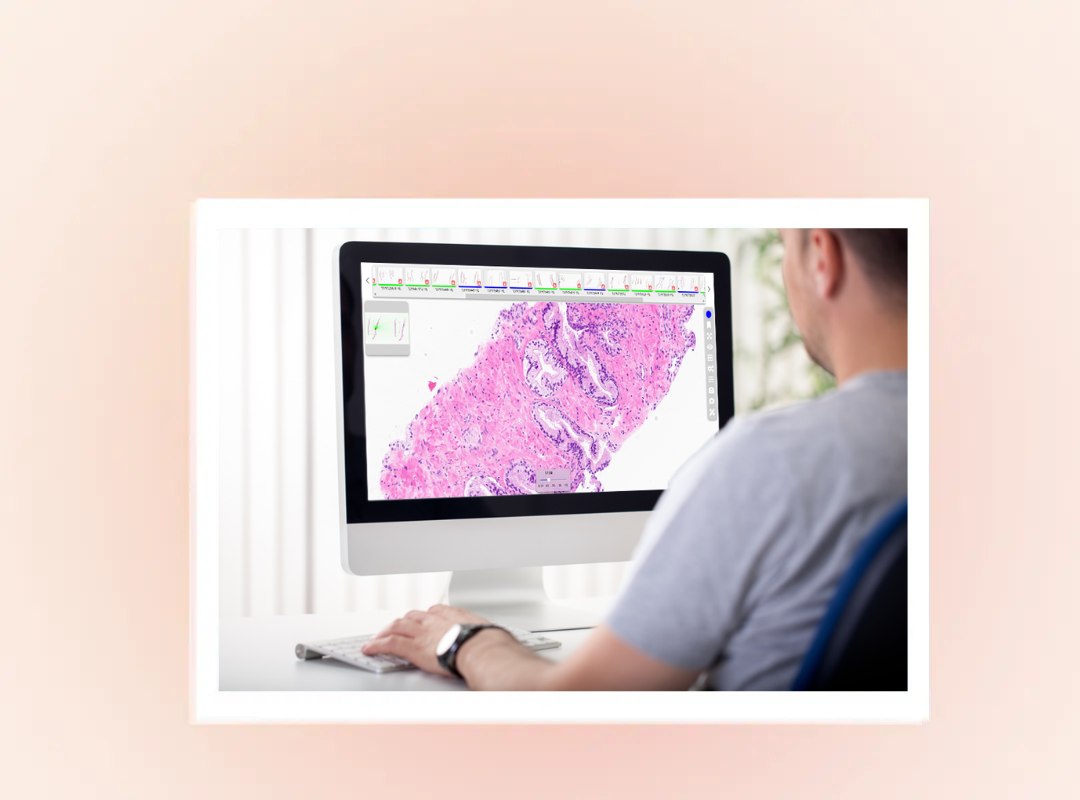
Moving from the microscope to the screen does require adaptation. There is no denying that. But the tools available in digital workflows more than compensate: smooth navigation, side-by-side comparisons, integrated annotations and measurements, instant access to previous cases, and the ability to consult a colleague remotely within minutes.
Remote validation, once considered an exceptional solution, is becoming a true operational advantage. Urgent cases can be automatically prioritized. And visual fatigue, common with traditional microscopy, often decreases with a properly configured digital workstation.
There is a learning curve, but it is short. Validation periods generally last only a few weeks. After that, most pathologists have no desire to go back.
Quality and Compliance: A Decisive Advantage
If there is one point of agreement among pathologists, laboratory managers, and hospital leadership alike, it is this: digital pathology provides evidence.
Every image is captured, time-stamped, stored, and accessible. Scan validation, monitor calibration, rescan thresholds, everything is documented, traceable, and auditable. Whether for accreditation, legal requirements, or continuous improvement initiatives, this level of traceability transforms the practice. Processes are no longer simply trusted, they can be demonstrated.
A Wide Window of Opportunity
Funding opportunities, vendor support, and deployment expertise have never been more accessible. Studies validating digital primary diagnosis are numerous and span multiple specialties. Regulatory frameworks have matured. And the community of laboratories already engaged in digital pathology is now large enough for others to benefit from their experience.
Laboratories taking action today will build the next decade on strong digital foundations. Those that wait will spend the next decade trying to catch up.
The technology is ready. The evidence exists. The support is available. What remains is a decision.
Digital pathology is no longer a future vision or an experimental initiative limited to a handful of pioneering centers. Hundreds of laboratories have already embraced this transition and are demonstrating its clinical, operational, and organizational value every day. The question is no longer when to go digital. The time is now. The real discussion is how to approach this transformation in a way that makes sense for your laboratory.
Tribun Health supports pathology laboratories at every stage of their digital transformation journey, from pilot projects to primary diagnosis. If you are currently evaluating your options, we can share practical feedback and real-world experience to help inform your decision. Get in touch with our team.
Interested in learning how modern digital pathology platforms support enterprise-scale deployment?
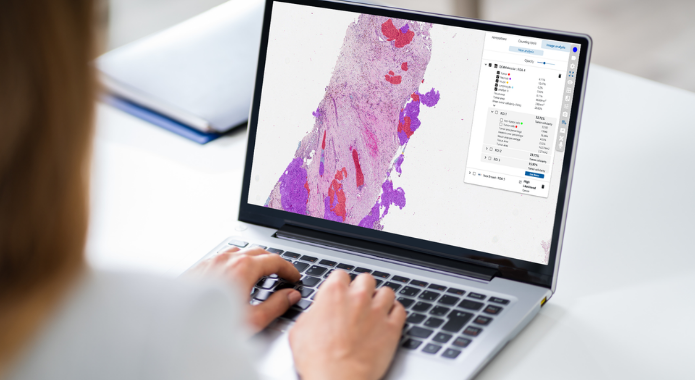
Explore how CaloPix® enables vendor-neutral digital pathology workflows, enterprise integration, and AI-ready infrastructure.

.webp)