





.png?width=256&height=256&name=customer-service(1).png)



.png?width=64&height=64&name=calendrier(1).png)
.png?width=64&height=64&name=communique-de-presse(1).png)
.png?width=64&height=64&name=livre(1).png)
.png?width=64&height=64&name=blog(2).png)





Why Health Systems Must Rethink Where They Invest
Cancer care has made undeniable progress.
Survival rates have improved significantly over the past decades.[1] New therapies, better targeting, and scientific breakthroughs have changed clinical practice and patient outcomes. This is good news—and it matters.
But progress has a price. And that price is rising faster than healthcare systems can realistically absorb.
A recent article published in Les Echos captures this tension well. It shows how cancer survival continues to improve while the cost of oncology care—particularly drug spending—accelerates at an alarming pace. The article is worth reading. But more importantly, it forces an uncomfortable question:
If the current trajectory continues, is our cancer care model financially sustainable?
Innovation Alone Will Not Solve the Cost Problem
For years, health systems have relied heavily on downstream innovation—new drugs, new biologics, new therapeutic classes—to improve outcomes. These innovations are valuable. But they are also expensive, complex, and often introduced late in the care pathway.
The article highlights a critical reality: not all innovation delivers proportional clinical value, and some comes at extraordinary cost for marginal benefit.
This does not mean innovation should slow down. It means investment priorities must become more strategic.
Healthcare systems cannot rely exclusively on late-stage interventions to manage rising demand, workforce shortages, and constrained budgets. They must also invest earlier in the pathway—where efficiency, consistency, and scale can have a compounding effect.
The Overlooked Lever: Diagnosis and Workflow
Diagnosis is one of the most powerful—and underutilized—levers in healthcare.
Earlier detection, faster interpretation, and standardized diagnostic workflows reduce uncertainty, accelerate treatment decisions, and avoid unnecessary downstream costs. Yet diagnostic infrastructure is often fragmented, local, and disconnected from enterprise strategies. Delays in diagnosis matter: a delay of 28 days in cancer diagnosis or treatment is associated with an approximately 13% lower chance of survival for the patient.[2]
Pathology is a clear example.
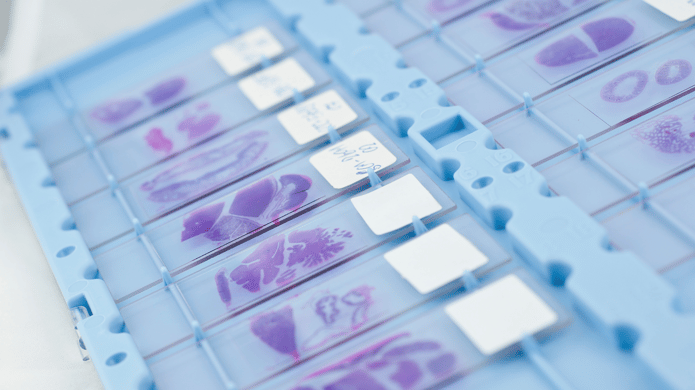
Traditional, glass-based workflows were designed for a different era: single sites, localized expertise, predictable volumes. Today’s reality is very different:
- Multi-site health systems
- Increasing case complexity
- Shortages of specialized professionals
- Rising expectations for speed, quality, and traceability
In this context, maintaining analog diagnostic workflows is no longer a neutral choice. It is a constraint.
Digital Pathology as System Infrastructure
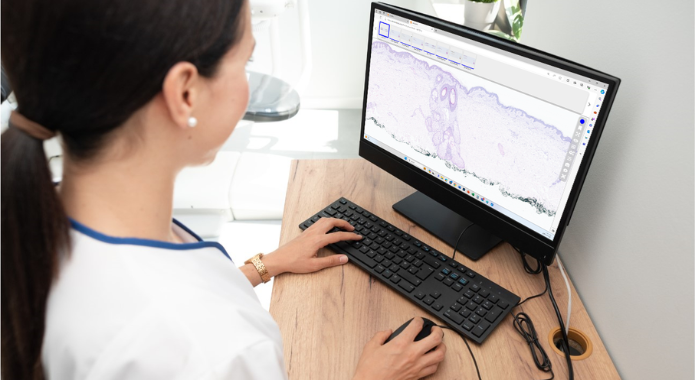
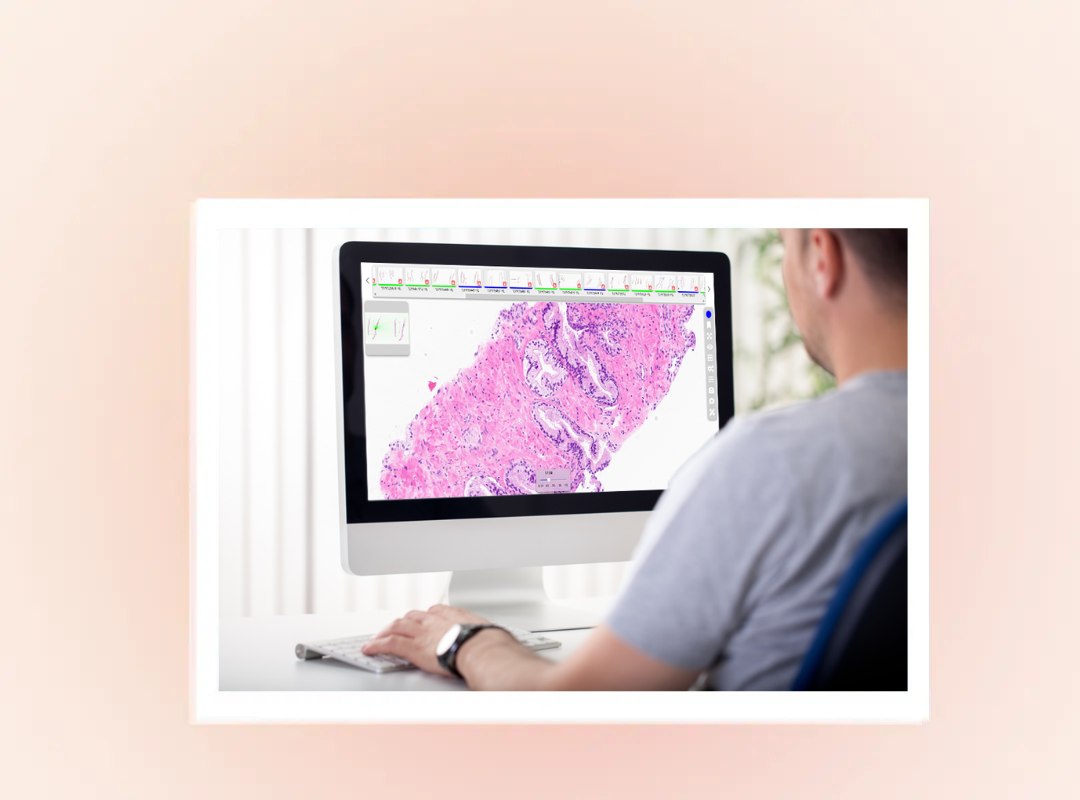
Digital pathology should not be framed as a technological upgrade or a research initiative. It should be understood as clinical and operational infrastructure.
When pathology is digitized and integrated into an enterprise imaging environment, health systems gain:
- Faster and more consistent diagnostic workflows
- Better use of specialist capacity across sites
- Reduced turnaround times for oncology decisions
- Improved quality assurance and traceability
- A controlled foundation for AI—when and where it adds value
This is not about replacing professionals. It is about enabling them to operate at scale, under pressure, with better tools.
In the cost environment described by Les Echos, these capabilities are no longer optional. They are strategic.
What This Means for CIOs and Procurement Leaders
The article implicitly calls for tougher choices. CIOs and procurement leaders are central to those choices.
The key questions are no longer:
- Is this technology innovative?
- Is it interesting?
They are:
- Does it reduce structural inefficiencies?
- Does it support earlier, faster decision-making?
- Does it scale across the organization?
- Can its impact be measured and governed?
Digital pathology, when positioned as part of an enterprise imaging strategy—not as a siloed departmental tool—meets these criteria.
It supports policy goals that many systems now share:
- Standardization of care
- Better governance of innovation
- Smarter use of limited clinical resources
- Long-term financial sustainability
A Shift in Perspective Is Required
The debate should not be framed as innovation versus cost control.
The real issue is where innovation creates the most durable value, for healthcare organizations and for patient outcomes.
The next phase of cancer care will not be defined only by new therapies. It will be shaped by earlier diagnosis, better coordination, and more efficient use of expertise. That requires investment upstream, in the foundations of care delivery.
Digital pathology is one of those foundations.
A Final Thought
The Les Echos article is a timely reminder that progress without structure is not sustainable. It invites health leaders to look beyond individual breakthroughs and think systemically.
At Tribun Health, we believe that improving outcomes and controlling costs are not competing objectives. But achieving both requires a shift in focus—from late intervention to early action, from fragmentation to integration, from experimentation to infrastructure.
We encourage CIOs, lab leaders, and procurement teams to read the article—and then ask themselves:
If cancer care is to remain both effective and affordable, where should we invest first?
Often, the most impactful answers lie earlier than expected.
Rethink where value is created in cancer care.
If you’re reassessing how diagnostic infrastructure fits into your enterprise imaging and oncology strategy, let’s have a focused discussion.
References
[1] Siegel RL, Kratzer TB, Wagle NS, Sung H, Jemal A. Cancer statistics, 2026. CA: A Cancer Journal for Clinicians, 2026.
Available at: https://acsjournals.onlinelibrary.wiley.com/doi/10.3322/caac.70043
[2] Maringe, C., et al. Impact of delays on cancer survival: a pooled analysis, BMJ, 2021. Available at: https://www.bmj.com/content/371/bmj.m4087

Follow Tribun Health on LinkedIn for updates on digital pathology, AI, and enterprise-scale innovation. #DigitalPathology #AIinPathology #EnterpriseImaging

.webp)